
Shadow AI: how to find it and secure it in your company
by Claudiu Hulea · IT Management Consultant
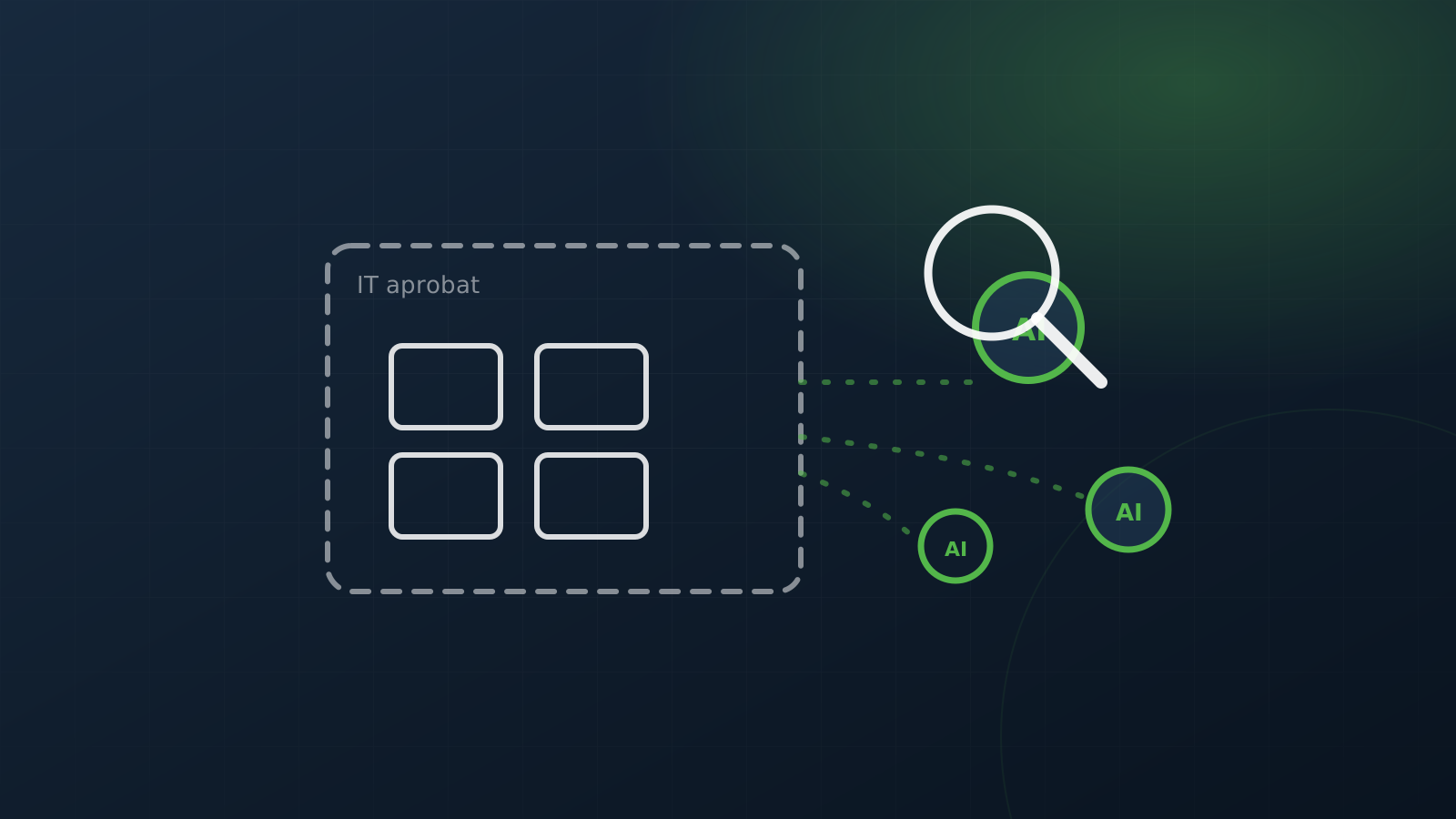
“Shadow AI” means the AI tools employees use without IT’s knowledge or approval — from chatbots and browser extensions to AI features inside SaaS apps, autonomous agents and MCP servers. They spread fast because they’re useful, and the problem isn’t that people want to work better; it’s that nobody can see where the data ends up. Below: what it is, why it’s a risk, how to find it and how to govern it.
What is shadow AI?
It’s the “AI” version of the older shadow IT phenomenon: applications adopted outside official processes. The difference is that AI tools often need access to data to be useful — documents, e-mails, SaaS accounts — and they get it through OAuth grants or MCP connections nobody reviewed.
Why it’s a risk
- Data leakage. Employees paste personal data, secrets, financial information or code into AI tools — which may be stored, used for training or exposed.
- Over-permissioned integrations. An AI tool connected via OAuth/MCP can receive broad access to SaaS data (e-mail, files, CRM), far beyond what’s needed.
- Uncontrolled sprawl. New integrations appear constantly, with no inventory and no owner.
- Compliance. Under the GDPR (and NIS2, for covered entities), processing data through unauthorised tools — often outside the EU — is a genuine compliance problem.
How to find it
You can’t govern what you can’t see. Practical methods, in order of effort:
- The IdP/SSO inventory. Microsoft 365 or Google Workspace shows the third-party apps that have been granted access (OAuth) — the fastest starting point.
- Email signals. Automated notifications from providers (new-account confirmations, resets, invoices) reveal self-adopted tools.
- Network and endpoint telemetry. DNS/proxy logs, a CASB or your DLP show traffic to known AI services.
- Reviewing OAuth/MCP grants. Which integrations have access to your SaaS data, and with what scopes?
- Procurement and expenses. AI subscriptions paid on a personal card or via expense claims are another signal.
How to govern it (without blindly banning)
An outright ban doesn’t work — people find even less visible alternatives. The healthy approach is visibility + clear rules + approved alternatives:
- An AI acceptable-use policy — what’s allowed, what data is never entered, which tools are approved.
- An inventory with an owner for each approved AI tool, plus a risk classification.
- Least privilege on integrations — review and tighten OAuth/MCP scopes; remove what’s unused.
- Traffic controls (CASB/DLP) to prevent uploading sensitive data to unapproved tools.
- Monitoring — correlate AI activity with SIEM/XDR and keep audit trails.
- Approved alternatives + training — offer an accepted AI tool and gently nudge users toward it, rather than punishing use.
The takeaway
Shadow AI isn’t a problem of “disobedient” people; it’s a problem of unseen access. The risk drops through visibility (discovering what’s in use), simple rules (what data is never entered), least privilege on integrations, and an approved alternative people actually want to use. An IT security audit is a good way to run the first discovery — which AI tools and integrations already exist in your organisation.
See also: How enterprise GenAI amplifies ransomware risk, and how to contain it.
Sources
- BleepingComputer — Shadow AI is everywhere: here’s how to find and secure it (article sponsored by Nudge Security)
Frequently asked questions
What is shadow AI?
The AI tools employees use without IT's knowledge or approval — from chatbots and browser extensions to AI features in SaaS, autonomous agents and MCP servers. It is the "AI" version of shadow IT, except AI tools often need access to data (documents, email, SaaS) through OAuth grants or MCP connections nobody reviewed.
Why is it a risk?
Data leakage (employees paste sensitive data that may be stored or used for training), over-permissioned OAuth/MCP integrations, uncontrolled sprawl with no inventory or owner, and compliance problems (GDPR/NIS2) when data is processed through unauthorised tools, often outside the EU.
How do I find it?
You can't govern what you can't see. Start with the OAuth app inventory in your IdP/SSO (Microsoft 365, Google Workspace), email signals (new-account confirmations), network/endpoint telemetry (DNS/proxy, CASB, DLP), a review of OAuth/MCP grants, and AI subscription spending.
How do I govern it without blindly banning?
An outright ban doesn't work. Combine visibility plus clear rules plus approved alternatives: an AI acceptable-use policy, an inventory with an owner, least privilege on integrations, traffic controls (CASB/DLP), monitoring (SIEM/XDR), and an approved AI tool you gently nudge users toward.