AI doesn't make your work faster. It changes your profession
by Claudiu Hulea · IT Management Consultant
A founder’’s opinion. The facts about the Meta discussion are attributed. The rest is my view.
Last month, Andrew Bosworth, Meta’‘s CTO, told employees in an internal Q&A that the time AI saves should go into more product, not more time off. When someone asked whether efficiency could be turned back into benefits — say, reinstating paid time off — the answer was short and dismissive. The account is Business Insider’’s, citing three employees present. It is not an official transcript.
The tone is wrong. But, as an employer, I admit the question behind it preoccupies me too. Only my answer is different. Different from Bosworth’‘s, and from the employees who ask “if I’‘m more efficient with AI, where’’s my share?”
The same pie, sliced differently, or a new pie?
The debate is old and simple. AI makes you more efficient. Who takes the gain?
- The company, Bosworth’’s version: mine, put the hour into the product.
- The employee: mine, pay me better or give me time.
Both treat it as a fixed pie you merely slice differently. I think both are wrong. At an inflection point the pie is not sliced. It melts and is poured again.
AI doesn’’t speed up the old job. It dissolves it.
Since I put AI into every process in the company, I discovered something the “money or time off” question can’’t see: we are not doing the old work faster. What “work” means is changing, and above all what “qualified” means.
The clearest proof is in hiring. I hired people with no IT experience at all, among them a history graduate. Not out of charity, and not as a PR experiment. But because, in an organisation with AI at its core, technical knowledge is secondary at entry. What matters is the ability to understand a process and adapt. The rest is built by AI and the team that guides them, like scaffolding that lifts someone from the ground to the top floor in a few months.
The result, measured: an onboarding that would previously have taken about two years for someone without a technical base dropped to a few months.
I no longer hire a CV. I hire the ability to adapt. A diploma tells you what someone has learned so far. Adaptability tells you how fast they become something else. In a market rewriting itself under everyone’’s feet, the second is worth more.
To be clear: this works because you have a solid core team and an AI that holds the scaffolding. Not “expertise no longer matters”, but expertise concentrated in a few people and in tools can lift someone from zero, fast. The entry barrier melted. The ceiling stayed.
The win/win I try to get across
Here is what I tell my people, and the hard part to convey. We do not look at how to slice today’’s pie differently. We look at what kinds of roles we create: functions no one has defined yet. The more you understand and invest in this, the more you grow with the shift, not just the company. You get, individually, ahead of the market.
The company is not the only winner. You win too, personally. But not as a day off on the old job, as a new, more valuable profession in which you are among the first on ground that is only now forming.
Why now is not the moment to pause
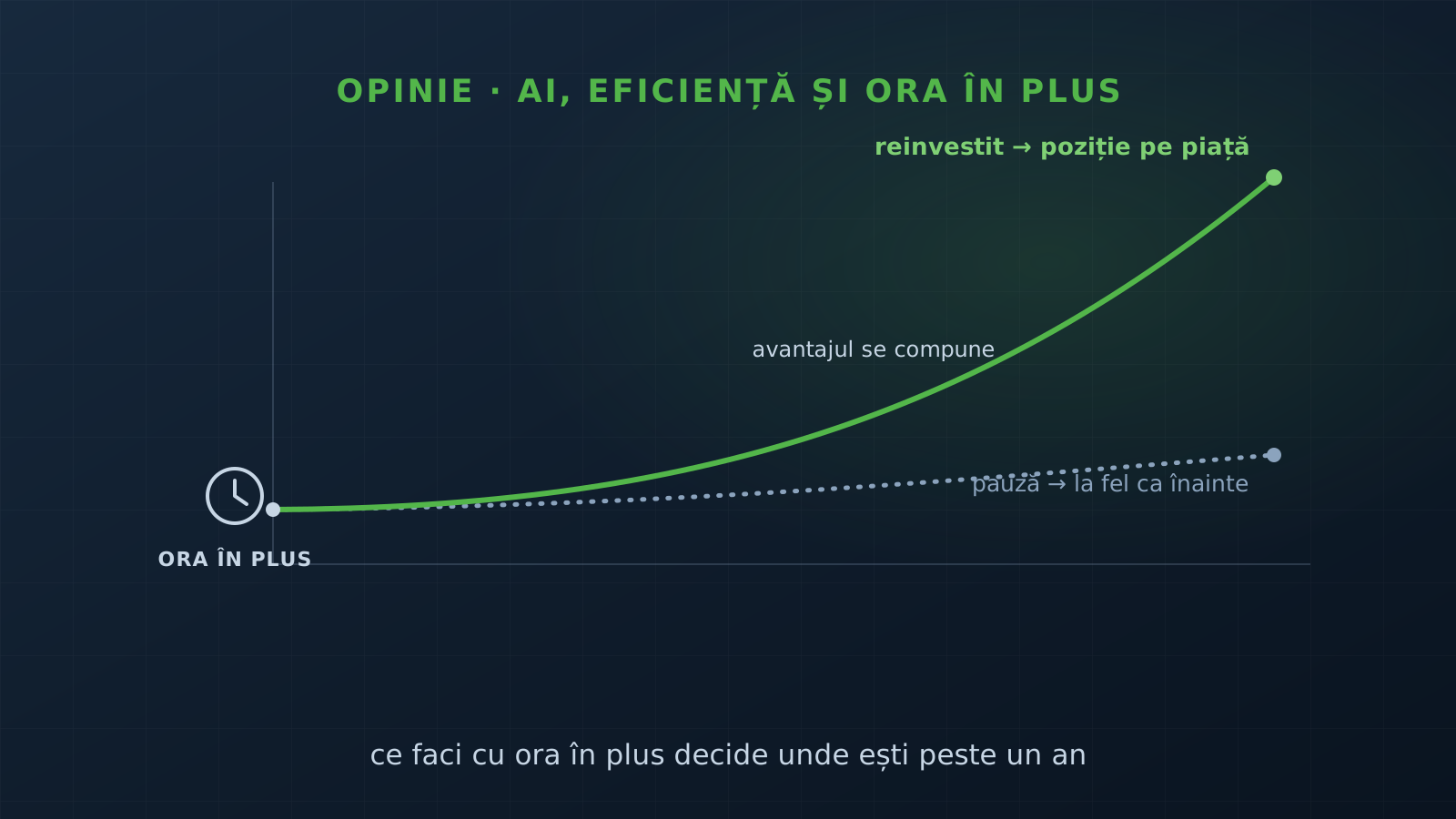
And here I come, partly, close to Bosworth, but for a different reason. Not because I want to squeeze that hour. Because right now the hour compounds.
At an inflection point, an hour lost is not an hour. When the ground shifts under everyone at once, the speed at which you reposition adds up into a durable advantage. Whoever moves first takes a spot others can’’t easily recover. Not because they work more, but because they arrived earlier on the new map.
The difference from Bosworth is honesty about duration: it’’s a window, not an endless sprint. I do not ask for permanent acceleration. That is a treadmill, and it burns people out. I ask for acceleration while the window is open and compounding, with a payoff shared once we secure the position. A joint bet, with an end. Not extraction without limit.
The hard part
It is not sharing the gain. My people already have benefits above what comparable firms offer. The hard part is getting them to see that, right now, the biggest gain is not a day off or a raise on yesterday’’s job. It is becoming a different kind of professional, more valuable, and there among the first.
Bosworth is half right: the extra hour is not to be wasted now. But he is wrong on the half that matters. The goal is not more of the same product, with the same people. It is a different product, with people who have become something else.
And that is not achieved with “don’‘t ask about time off, it’’s stupid.” It is achieved by showing people the new pie, and what slice they take from it if they move now, while it is still being poured.
Frequently asked questions
What did the Meta CTO say about AI and time off?
According to Business Insider, citing three employees present at an internal Q&A in July 2026, Andrew Bosworth (Meta CTO) argued that the time AI saves should go into more product, not benefits; asked about reinstating paid time off, he answered dismissively. It is not an official transcript — it is a second-hand account, reported here as such.
Should AI efficiency gains go to the company or to employees?
The question, framed that way, misses the point — it assumes a fixed "pie" that is simply sliced differently. At an inflection point the pie is not sliced, it melts and is poured again: AI does not make the old job faster, it creates new roles. The employee's real gain is not a day off on yesterday's job, but becoming a different kind of professional, more valuable — and among the first.
Can you hire people with no IT background at a technology firm?
Yes. In an organisation with AI at its core, technical knowledge is secondary at entry: what matters is the ability to understand a process and adapt, and the rest is scaffolded by AI and the core team that guides them. In my company, an onboarding that would have taken about two years for someone without a technical base dropped to a few months. The entry barrier melted; the ceiling stayed — it works because expertise concentrated in a few people and in tools can lift someone from zero, fast.
Why does timing matter now, at the AI inflection point?
Because it compounds. When the ground shifts under everyone at once, the speed at which you reposition adds up into a durable advantage: whoever moves first takes a spot that is hard to recover — not because they work more, but because they arrived earlier on the new map. Important: it is a window, not an endless sprint. Accelerate while the window is open, and cash in together afterwards — not extraction without end.