
The ANCPI attack: what the DNSC technical analysis shows, and what to learn
by Claudiu Hulea · IT Management Consultant

DNSC has published its intermediate technical analysis of the attack on ANCPI (no. T66/22.07.2026). It confirms a double-extortion ransomware attack attributed to the ByteToBreach group, in which a single entry point turned into the complete compromise of the organisation. Below are the facts from the report and — more importantly — what to learn from them. For the press timeline, see also the incident news article.
What was confirmed, in brief
- Attack type: double-extortion ransomware (encryption + the threat of publishing data), attributed to ByteToBreach.
- Destruction: out of 1,083 virtual machines, the attacker deleted roughly 100.
- Affected applications: e-Terra, ePayment, MyEterra, the Owners’ Register, Property Titles, RENNS, the Agricultural Register, the Geoportal and others — effectively the availability of ANCPI’s whole network.
- Recovery: there is no decryptor (neither at DNSC nor in open sources) — restoring service depends on backups.
The attack chain, step by step
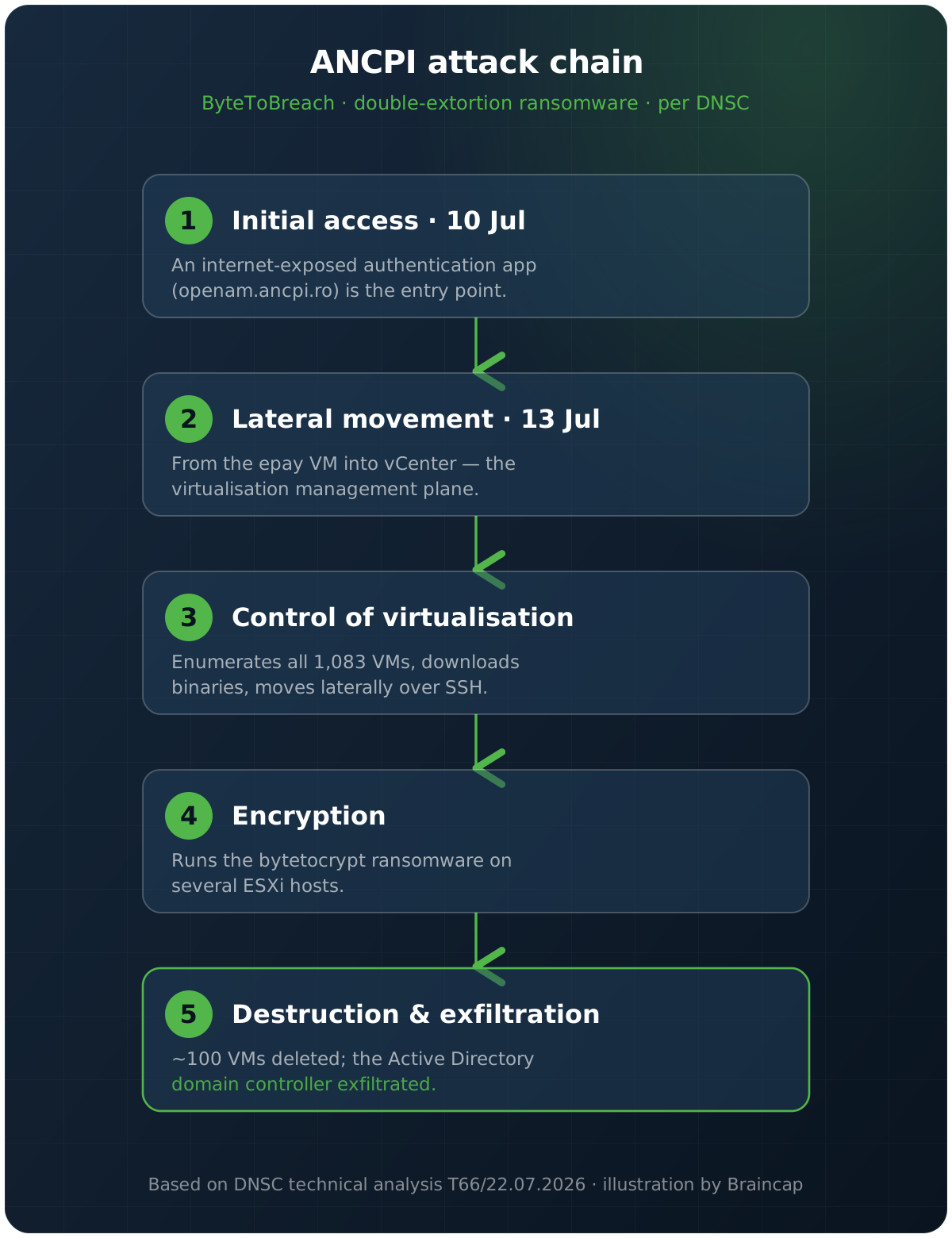
- Initial access (10 July) — through an internet-exposed authentication application (
openam.ancpi.ro) that served the payments platform. This was the initial point of compromise. - Reconnaissance and lateral movement (13 July) — from the
epayapplication’s virtual machine, the attacker initiated logins to vCenter (the virtualisation management plane) — a session from the production segment into the management plane, a clear sign of lateral movement. - Control over virtualisation — on vCenter the attacker enumerated all 1,083 VMs, downloaded binaries and moved laterally over SSH.
- Encryption — ran the
bytetocryptransomware binary on several ESXi servers, first obtaining an interactive shell by exploiting the servers. - Destruction and exfiltration — deleted ~100 VMs and exfiltrated the Active Directory domain controller (the
DC1machine, copied viascpto an attacker-controlled server), plus the source code of some applications.
What data was affected
- Availability: heavily affected, through the deletion of virtual machines.
- Confirmed exfiltration: the Active Directory domain controller and the source code of some ANCPI applications.
- The Oracle Exadata database: per DNSC, it is unlikely the attacker holds data from it — the published screenshots don’t indicate access to it.
Why it was possible (the root causes)
This is the part every organisation learns from. Per DNSC, the cumulative factors were:
- An authentication application exposed directly to the internet — the single entry point.
- Insufficient segmentation — it was possible to move directly from a production VM to the management plane (vCenter) and on to the hypervisors.
- No MFA on privileged accounts — compromising a single account opened the whole infrastructure.
- Antivirus only on workstations, not on servers.
- Poor visibility: the WAF in front of
epaykept logs for only 7 minutes — far below what’s needed, which hampered reconstructing the attack. - Recovery tied to backups: without offline/immutable copies, restoring after deletion becomes very hard.
DNSC’s conclusion is blunt: the lack of a coherent infrastructure-management policy, weak segmentation and poor credential handling let a single point of compromise become a total compromise.
What every company should do
DNSC’s recommendations, condensed to what matters most:
- Secure internet-exposed applications and place them in a DMZ, separated from the internal network.
- Segment strictly — especially the management plane (vCenter, domain controllers) — so a compromised VM can’t move laterally at will.
- Mandatory MFA on privileged accounts and remote access; apply least privilege and just-in-time access.
- Centralised monitoring (SIEM/XDR) with logs from the hypervisor, Active Directory, firewall, DNS and servers — and adequate log retention (not 7 minutes).
- EDR on servers, not just antivirus on workstations.
- Immutable and offline backups (the 3-2-1 model), tested regularly — the only real safety net against deletion/encryption.
- Periodic security audits and penetration tests to validate the measures.
The first two are usually where we start with a client: an IT security audit shows where you’re exposed, and a penetration test confirms what is genuinely exploitable — exactly the pattern that was missing here.
The takeaway
The incident wasn’t technically spectacular — it was effective because the defences had basic gaps: an exposed application, weak segmentation, no MFA, insufficient logging and no immutable backups. The difference between “one compromised account” and “the whole organisation down” is made by exactly these controls.
Sources
- DNSC intermediate technical analysis no. T66/22.07.2026 on the incident in the ANCPI infrastructure (official document, unclassified).
- The ANCPI cyberattack: the facts, in brief (the press timeline)
- DNSC — the National Cybersecurity Directorate
Frequently asked questions
What type of attack was it, per the DNSC technical analysis?
A double-extortion ransomware attack (encryption plus the threat of publishing data), attributed to the ByteToBreach group. Out of 1,083 virtual machines, the attacker deleted roughly 100. There is no decryptor, so restoring service depends on backups.
How did the attack unfold, step by step?
Initial access (10 July) was through an internet-exposed authentication application (openam.ancpi.ro). From there the attacker moved laterally to vCenter (the virtualisation management plane), enumerated all 1,083 VMs, ran the bytetocrypt ransomware on ESXi servers, deleted roughly 100 VMs and exfiltrated the Active Directory domain controller and the source code of some applications.
Why was it possible (the root causes)?
Per DNSC: an authentication application exposed directly to the internet, insufficient segmentation (it was possible to move from a production VM to the management plane), no MFA on privileged accounts, antivirus only on workstations (not servers), and poor visibility — the WAF kept logs for only 7 minutes.
What should a company learn from this incident?
The basic controls that were missing: securing internet-exposed applications (a DMZ), strict segmentation of the management plane, MFA on privileged accounts, EDR on servers, centralised monitoring with adequate log retention, and immutable, offline backups (the 3-2-1 model). A security audit and a penetration test validate these measures.