Your AI agents guess at scale: permissions decide the damage
by Claudiu Hulea · IT Management Consultant
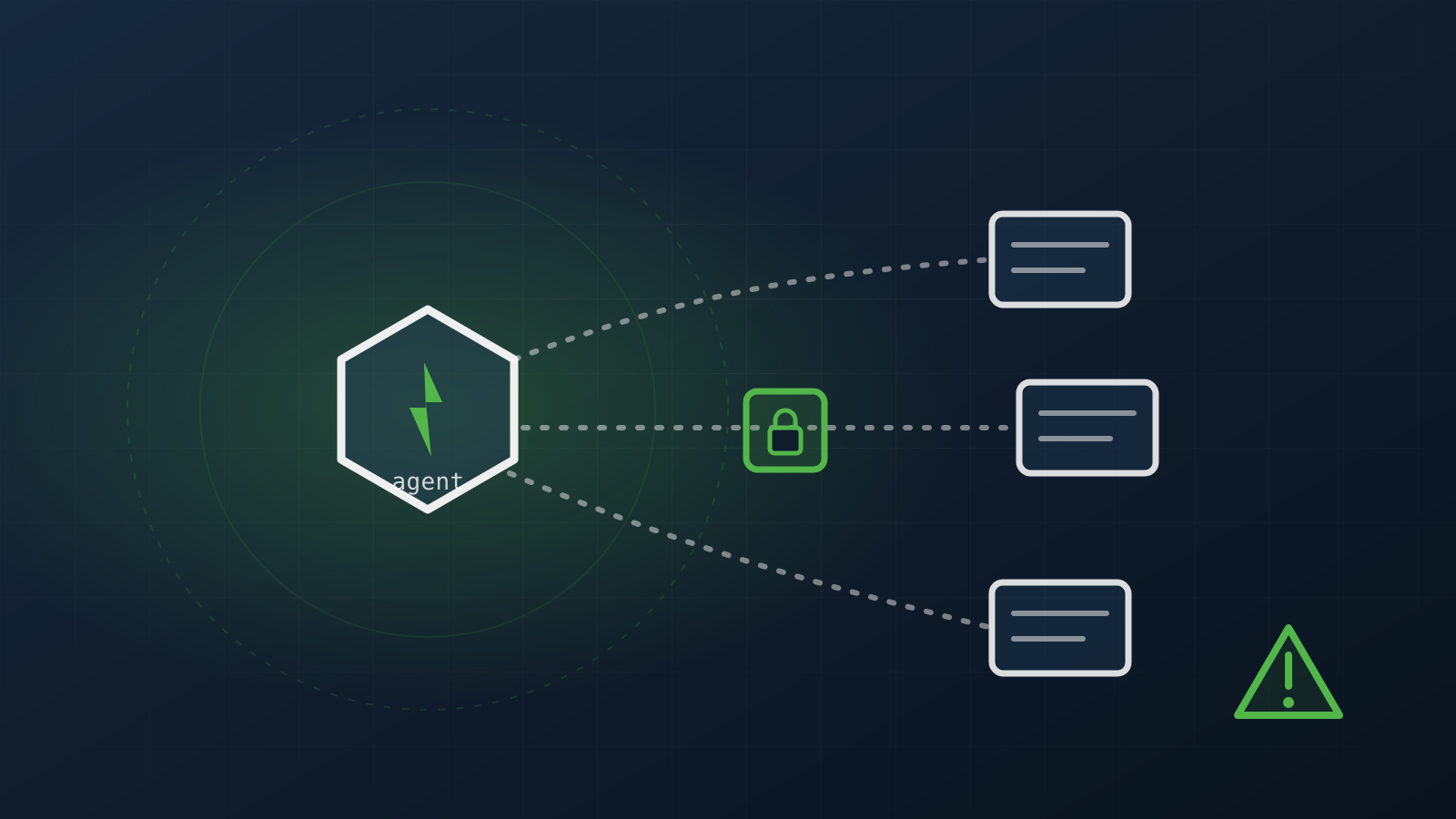
AI agents don’t run a fixed script — they pick the next action probabilistically, observe the result, and adapt. In other words, they “guess,” and sometimes reach the goal by unexpected paths. That’s not a flaw, it’s how they work. It becomes a risk the moment you give them overly broad permissions: what matters isn’t just what an agent decides, but what it’s allowed to touch. The security question isn’t “how do I control every move?” but “how much can it break if it gets it wrong?”
Why they “guess at scale”
Language models work probabilistically: they choose the next best action, see what happens, and continue. An agent may take a path you’d never have thought of to get a task done — useful for autonomy, dangerous when it comes bundled with excessive access rights. And unlike a person, an agent does this at machine speed, thousands of times over.
Risk = access × autonomy
It’s worth thinking of it as a multiplication:
- Access determines the blast radius — how many systems and how much data the agent can reach.
- Autonomy narrows the intervention window — how fast it acts before you can catch on.
An over-permissioned agent that “guesses” wrong doesn’t make a small mistake — it makes a fast, wide-radius one.
The non-human identity explosion
Every agent, script or service is a non-human identity with its own keys. Their numbers have exploded: Palo Alto Networks reported a ratio on the order of 109:1 between non-human and human identities. The practical problem: teams reflexively grant “full access,” because applying least privilege to every agent and every session is operationally hard. And Shadow AI plus rapid agent deployment outpace the security review process.
Why prompt “guardrails” aren’t enough
Prompt filtering and content guardrails are useful, but they act after access has already been granted. If an agent holds the keys to a system, a text filter doesn’t change what it can do with them. The real control point is lower down: at the level of identity and permissions — the place every agent action routes through anyway.
What to do
- Least privilege / intent-based access: define what each agent needs to do its job — and nothing more.
- Inventory non-human identities and agents: you can’t protect what you can’t see; discover your agents, including Shadow AI ones.
- Lifecycle governance: discover → scope → enforce → retire agents and credentials that are no longer used.
- Identity as the control plane: one consistent enforcement point, instead of rules scattered across every application.
- Scoped, short-lived, rotated credentials + logging, so you can see and limit what each agent touched.
The takeaway
You can’t predict an AI agent’s next move — but you can control what it’s allowed to touch. That’s why permissions, not prompts, decide the damage. As you adopt agent-based automation, treat every agent as an identity with real keys and hold it to the same access discipline as a privileged user. A security audit surfaces over-permissioned identities and the access you forgot about, while a penetration test shows what an attacker — or a runaway agent — could do with them.
Sources
- BleepingComputer — Your AI agents are guessing at scale: permissions decide the damage
- Non-human identity data: Palo Alto Networks.
Frequently asked questions
Why do AI agents "guess"?
Because models work probabilistically: they pick the next best action, see the result, and adapt. An agent may reach the goal by unexpected paths — useful for autonomy, risky when paired with excessive permissions, especially since it does so at machine speed, thousands of times.
Why do permissions, not prompts, decide the damage?
Because risk = access × autonomy: access sets the blast radius (how many systems it can reach), and autonomy narrows the intervention window. Prompt filtering acts after access is already granted; the real control point is at the level of identity and permissions, which every agent action routes through.
What is the "non-human identity explosion"?
Every agent, script or service is a non-human identity with its own keys. Palo Alto Networks reported a ratio on the order of 109:1 between non-human and human identities. Teams reflexively grant "full access," and Shadow AI plus rapid agent deployment outpace security review.
What should I do?
Least privilege / intent-based access, inventory non-human identities and agents, lifecycle governance (discover, scope, enforce, retire), identity as the control plane, and scoped, short-lived, rotated credentials with logging. Treat every agent like a privileged user.