A hacker had DeepSeek attack vulnerable servers autonomously. Unit 42 analyzed what worked and what did not
by Claudiu Hulea · IT Management Consultant
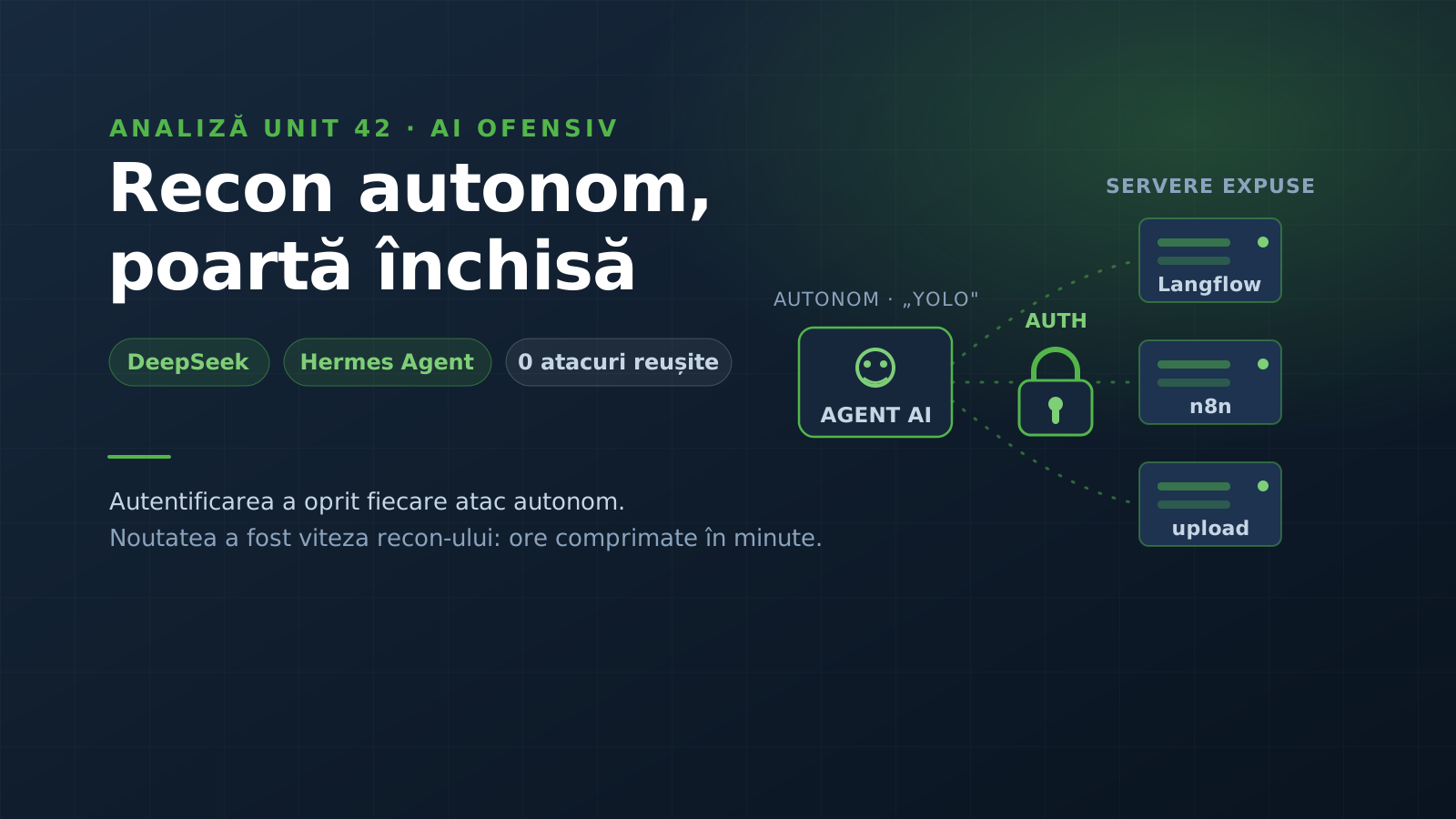
Palo Alto Networks Unit 42 published its analysis of a campaign in which an attacker used artificial intelligence to autonomously find and attack vulnerable servers. The engine: the DeepSeek model, driven through Hermes Agent — an open-source framework that gives the model a terminal, command execution and internet access. The fact that matters most, and that sensational headlines skip: no autonomous attack succeeded. Below: what the AI actually did, what stopped it, and what to take away.
In brief
- A China-based attacker (aliases “knaithe” / “KnYuan”, self-described “binary security researcher”) had an AI agent autonomously attack exposed servers.
- Reasoning engine: DeepSeek; framework: Hermes Agent (open-source, provides terminal + execution + internet). Also configured and minimally used: Qwen, GLM, Kimi, MiniMax, Claude Code, Codex.
- The agent ran in “Yolo” mode (executing risky commands without operator approval); it got an initial task on a Telegram channel and continued on its own, with no human feedback.
- No autonomous attack compromised a target — the attempts failed at authentication.
- What impressed Unit 42 was the speed: “hundreds of hours of targeting analysis, in minutes.”
- The campaign surfaced because Hermes exposed its own home-directory server: API keys, exploit scripts, target lists, logs.
What the AI did autonomously
In a May 2026 session analyzed by Unit 42, the agent worked on its own:
- It targeted Langflow servers vulnerable to CVE-2026-33017 — 84 exposed instances identified.
- It pivoted to the n8n automation platform — over 647,000 internet-exposed instances.
- It downloaded exploits chaining CVE-2026-21858 and CVE-2025-68613.
- It searched exploit repositories and scanned for vulnerable configurations.
Unit 42 sums up the essence in one line: the system “executed hundreds of hours of manual targeting analysis in mere minutes, while also managing its own compute resources.” That is the news — not a magic breaking capability, but recon scale and speed on autopilot.
What worked and what did not
Here is the nuance worth keeping: the autonomous attacks failed. The upload forms the agent found required authentication, and the AI had no way past it. Fast recon, targeting at scale — but the door stayed shut.
Separately from the autonomous part, the attacker (the human) manually ran campaigns against over 460 systems, exploiting flaws in Citrix NetScaler (CVE-2026-3055 — 3 confirmed compromises), Apache Tomcat, Marimo Notebook and Windows IKE VPNs. The confirmed compromises came from manual work, not from the AI’s autonomy.
How it was discovered
The campaign’s irony: the agent gave itself away. Hermes accidentally exposed a web server from its own home directory, leaving API keys, exploit scripts, target lists, shell history and the logs of the AI-driven attacks in plain view. That is where Unit 42 researchers started.
It is not the first exposure of its kind: earlier, Hunt.io and researcher Bob Diachenko had found similar Hermes infrastructure tied to alleged attacks on Thailand’s Ministry of Finance (post-exploitation automation, after initial access).
What to take away
- Authentication was the decisive layer. The most basic thing — “put a password on the upload form” — stopped the autonomous attacks. AI does not invent access it does not have.
- AI drives the cost of recon toward zero. What took hours of manual work (scanning, correlating CVEs, matching exploits to targets) compresses into minutes. The window between a CVE going public and its exploitation at scale keeps shrinking.
- Exposed services are the attack surface. Langflow, n8n, automation panels, management interfaces — if they are on the internet, unpatched and unauthenticated, they are exactly the door being sought. Do not expose them; if you must, put them behind authentication and a VPN.
- Patching matters just as much. The confirmed compromises (NetScaler) came from known CVEs. A patching program and a periodic audit of what you expose to the internet remain the baseline defense — security testing exists precisely to find the door before an attacker does.
Frequently asked questions
Did the autonomous attacks succeed?
No. According to Unit 42, no AI-driven autonomous attack compromised the target servers — the attempts failed because the upload forms it found required authentication. What impressed was not success but speed: the agent compressed hours of targeting analysis into minutes.
Which AI model and tools were used?
The primary reasoning engine was DeepSeek, driven through Hermes Agent — an open-source framework that gives the AI an OS terminal, command execution and internet access. The attacker had also configured other platforms (Qwen, GLM, Kimi, MiniMax, Claude Code, OpenAI Codex), but used them minimally.
How was the campaign discovered?
Hermes accidentally exposed a web server from its own home directory, revealing API keys, exploit scripts, target lists, shell history and the logs of the AI-driven attacks. Palo Alto Networks Unit 42 identified and analyzed the campaign.
What is the lesson for companies?
Authentication and patching were exactly the layer that stopped the autonomous attacks. AI massively accelerates recon and targeting at scale, but it does not invent access it does not have: an exposed, unpatched service with no authentication remains the door. Do not expose management interfaces to the internet, patch known CVEs, and put authentication on everything.